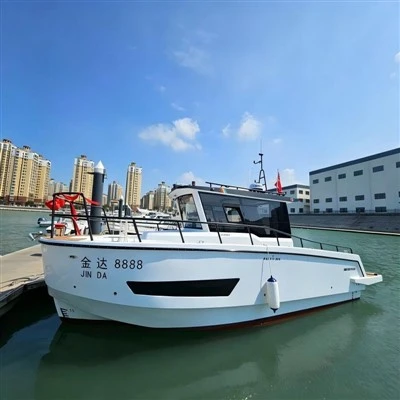

Commercial Fishing Trawlers: Engineered Around Your Fishing Operation
Trawlers are commercial fishing vessels configured for trawling operations, where fishing gear is towed through the water to target specific species and grounds.
Selecting the right trawler requires evaluating more than just hull size or engine power. Fishing methods, operating areas, target species, towing conditions, crew requirements, fish-handling capacity, refrigeration, fuel endurance, and regulatory compliance all dictate the final vessel specification.
-
![Aluminum Bottom Trawler]() Aluminum Bottom TrawlerOur aluminum bottom trawler adopts lightweight yet high-strength 5083-H116 marine grade aluminum alloy for both hull and superstructure. Designed around a deep V-shaped keel, the optimized bottom...
Aluminum Bottom TrawlerOur aluminum bottom trawler adopts lightweight yet high-strength 5083-H116 marine grade aluminum alloy for both hull and superstructure. Designed around a deep V-shaped keel, the optimized bottom... -
![Aluminum Stern Trawler]() Aluminum Stern Trawler1.Aluminum will spontaneously form a dense passivation oxide film in salt water, with no risk of rust. It has passed more than 720 hours of salt spray tests, and requires much less maintenance of...
Aluminum Stern Trawler1.Aluminum will spontaneously form a dense passivation oxide film in salt water, with no risk of rust. It has passed more than 720 hours of salt spray tests, and requires much less maintenance of...


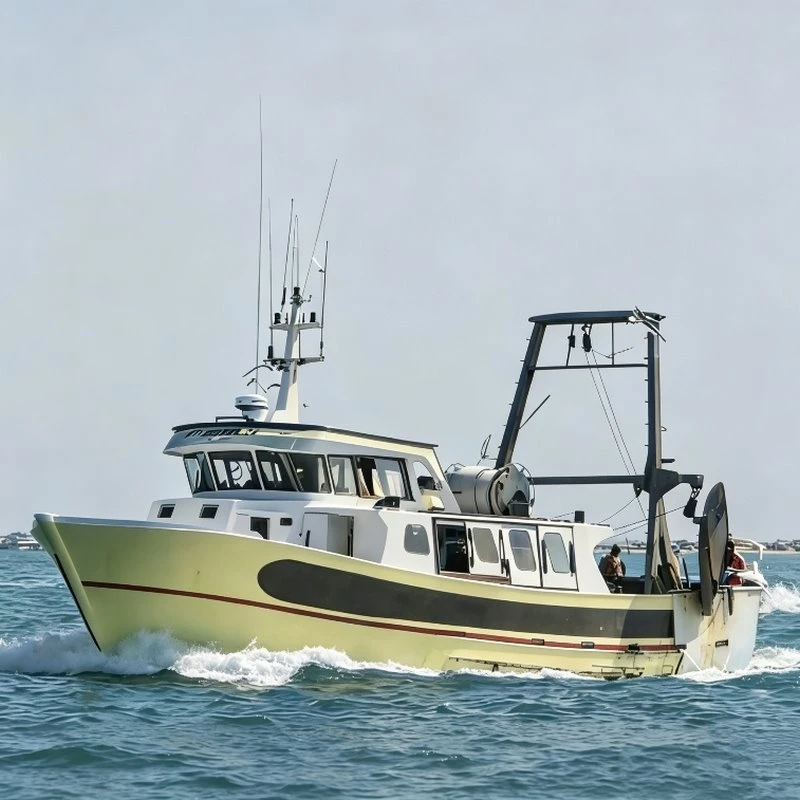
Different fishing operations require distinct deck layouts, working arrangements, and storage capacities.
Stern Trawlers: Handles trawl gear over the stern, providing a clear working route for deploying and recovering gear. Widely used for offshore commercial operations.
Side Trawlers: Operates fishing gear over the side of the vessel. Deck layouts, winch positions, and crew workflows are configured specifically for side-trawling methods.
Shrimp Trawlers: Features specialized deck arrangements for shrimp fishing, including trawl handling, sorting, catch handling, and tailored storage.
Freezer Trawlers: Combines fishing with onboard catch preservation. Configurations include insulated spaces, plate or contact freezing systems, blast freezers, and frozen storage.
Factory / Processing Trawlers: Incorporates dedicated spaces for sorting, processing, packing, freezing, and storage. Requires close coordination between hull layout, machinery, processing lines, and electrical loads.
Core Specification Factors
A trawler should be specified backward from the actual fishing operation.
Fishing Method
Configuration: Stern or side trawling; single or multiple trawl arrangements.
Operational Metrics: Target species, expected fishing depth, typical towing conditions, gear dimensions/weight, deployment methods, and deck machinery capacity.
Operating Area & Environment
Environment: Coastal, offshore, or deep-sea operations; typical and seasonal sea conditions.
Endurance: Distance from port, voyage duration, and required operating range.
Compliance: Flag-state regulations and major international classification standards (such as DNV, ABS, BV, or LR).
Principal Dimensions & Capacities
Length Overall (LOA): Determines general vessel scale, deck space, and accommodation volume.
Beam: Influences working deck area, internal arrangement, and stability.
Draft: Must align with target operating ports and fishing grounds.
Tonnage & Deadweight: Evaluates payload, fuel, stores, catch, and operating conditions.

Propulsion, Machinery & Deck Equipment
Propulsion and Power Performance
Propulsion power depends on displacement, hull form, operating speed, towing requirements, and sea conditions. Beyond propulsion, available power is critical for:
- Trawl winches and deck machinery
- Fish pumps, refrigeration, and processing equipment
- Hydraulic power systems and shipboard electrical loads
Fishing Deck and Trawl Equipment
Deck Machinery: Trawl winches, net drums, warping winches, trawl blocks, gallows, or A-frame arrangements.
Catch Handling: Fish pumps, sorting equipment, wash-down systems, and deck cranes designed for safe and efficient crew workflow.
Fish Handling, Storage and Refrigeration
Catch capacity involves strict temperature and preservation management:
Preservation Methods
Chilled fish storage, refrigerated sea water (RSW) holds, frozen storage, plate/contact freezing, or blast freezing.
Evaluation Metrics
Target species, expected catch volume, trip duration, required product temperature, and onboard processing requirements.
Navigation, Communication and Safety Systems
The safety and navigation package aligns with the intended operating area, crew complement, and classification society requirements:
Navigation: Radar, GPS/GNSS, electronic chart systems, depth sounders, autopilot, AIS, and VHF/long-range communication equipment.
Safety & Emergency: Fire detection and suppression systems, life-saving appliances (LSA), emergency power, bilge/dewatering systems, and emergency steering arrangements.
Trawler Procurement & Technical Scope
When evaluating vessel options, focus on the complete technical scope rather than the vessel price alone. A comprehensive quotation and build specification should clearly cover:
Hull & Structural Scope
Hull plates, deck structures, watertight bulkheads, and equipment foundations.
Machinery & Systems
Main engine, reduction gearbox, propeller shafting, auxiliary generators, and piping systems.
Equipment Integration
Deck machinery, hydraulic systems, refrigeration, and fish-processing lines.
Compliance & Documentation
Class approval, material certificates, welding documentation, machinery test records, and system commissioning reports.
Frequently Asked Questions
With abundant experience, we are one of the most professional trawlers manufacturers and suppliers in China. Please feel free to buy high quality trawlers made in China here from our factory. We also accept customized orders.
Popular Products