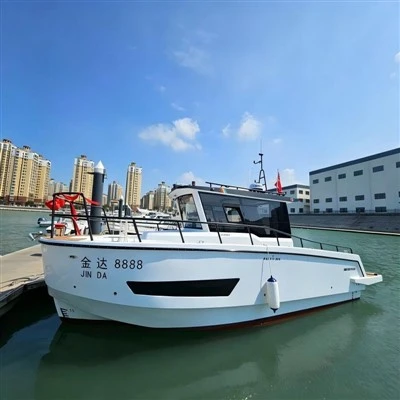

Comprehensive Procurement & Technical Guide: Commercial Landing Craft for Vehicles, Cargo, and Equipment Transport
Landing craft are purpose-built workboats designed for moving vehicles, equipment, personnel, and project cargo between shore facilities and locations where conventional port infrastructure is limited or absent.
The optimal vessel configuration is strictly determined by the operating mission: payload weight, deck loading limits, landing conditions, draft restrictions, ramp arrangement, propulsion requirements, and applicable marine regulations. For project-based procurement, these variables must be comprehensively defined before selecting the hull dimensions or machinery package.
-
![Vehicle Landing Craft]() Vehicle Landing CraftOur Vehicle Landing Craft is a practical shallow-draft roll-on/roll-off transport vessel purpose-built for un-docked beaching operations, cross-island material supply and short-distance water...
Vehicle Landing CraftOur Vehicle Landing Craft is a practical shallow-draft roll-on/roll-off transport vessel purpose-built for un-docked beaching operations, cross-island material supply and short-distance water... -
![Cargo Landing Craft]() Cargo Landing Craft1.No enclosed cargo hold. The wide, flat anti-slip patterned steel deck runs through from bow to stern without any blocking columns.
Cargo Landing Craft1.No enclosed cargo hold. The wide, flat anti-slip patterned steel deck runs through from bow to stern without any blocking columns.
2.Deck is fitted with reserved deck lashing rings and...


Landing Craft Types & Configuration Options
Selecting the right vessel begins with matching the craft's layout to your primary cargo-handling and operating requirements.
Vehicle Landing Craft: Engineered with a clear working deck and heavy-duty bow ramp access for wheeled or tracked machinery. Typical payloads include trucks, construction equipment, utility vehicles, and mobile generators.
Cargo Landing Craft: Tailored for transporting bulk construction materials, containers, project cargo, and general deck loads. The layout can be optimized around specific cargo envelopes rather than generic volume ratings.
Roll-On/Roll-Off (Ro-Ro) Landing Craft: Designed for efficient drive-on/drive-off operations. Ramp systems and structural decks are structurally engineered to handle the heaviest individual axle or wheel loads expected during operation.
Shallow-Draft Landing Craft: Essential for rivers, coastal areas, tidal flats, and remote islands where conventional workboats cannot navigate. Draft must be evaluated at the vessel's fully loaded displacement, not empty conditions.
Step-by-Step Selection Methodology
A professional landing craft should always be selected from the operating requirement outward, rather than by vessel length alone.
Define the Payload & Deck Loading
Identify maximum and typical cargo weights, including the heaviest single vehicle or machine.
Account for concentrated wheel, track, or outrigger point loads separately from average distributed deck loading.
Document cargo dimensions, center of gravity, and required clear working deck area.
Analyze the Landing Site Environment
Evaluate available water depth, tidal variations, and approach channel limitations.
Assess shore slope, beach/ramp conditions, current, and wave exposure.
Determine the Loading & Discharge Method
Choose between bow ramps, stern ramps, side-loading, or crane-assisted configurations based on shore infrastructure and cargo profiles.
Establish Principal Dimensions
Length Overall (LOA): Affects transport capacity, stability, and operational envelope.
Beam: Governs deck width, transverse stability, and clearance.
Draft: Determines accessibility to shallow-water landing sites.
Freeboard: Dictates loaded operating safety margins and statutory requirements.

Technical Specifications & Quality Standards
Because landing craft are highly customized project vessels, specifications must be verified against your exact operational profile.
Hull & Structure
Engineered hull forms with watertight subdivisions sized specifically for design loads, point impacts, and harsh marine environments.
Ramp System
The critical link between vessel and shore. Specifications must define exact safe working loads (SWL), hydraulic or mechanical drive systems, hinge arrangements, and non-slip surface treatments.
Propulsion & Machinery
Power output and propulsion types (conventional shaft, waterjet, etc.) matched to loaded displacement, service speed, and restricted-water maneuverability rather than raw horsepower alone.
Operating Environments & Tailored Requirements
Coastal Operations
Prioritize wave-handling capability, saltwater corrosion resistance, extended fuel range, and robust navigation electronics.
River & Inland Waterways
Focus on shallow draft, beam restrictions, low-speed handling in high currents, and compliance with local inland navigation rules.
Island Logistics
Balance cargo flexibility, fuel capacity, draft, and crew accommodation for extended remote transits.
Marine Construction
Require reinforced deck structures capable of withstanding heavy excavators, cranes, and concentrated structural steel loads.
Frequently Asked Questions
With abundant experience, we are one of the most professional landing craft manufacturers and suppliers in China. Please feel free to buy high quality landing craft made in China here from our factory. We also accept customized orders.
Aluminum Cargo Landing Craft, Car Landing Craft, Goods Landing VesselPopular Products