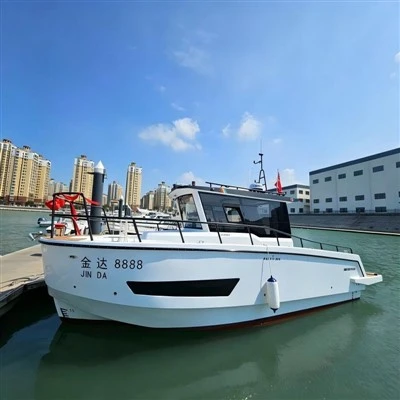

Professional Patrol Boat Procurement & Technical Guide
Patrol boats are purpose-built workboats engineered for coastal patrol, port security, maritime law enforcement, border control, surveillance, inspection, and high-demand waterborne operations.
In professional procurement projects, selecting the right patrol vessel is determined by the operating area and mission profile—never by speed alone. Hull configuration, stability, payload capacity, propulsion, fuel endurance, crew ergonomics, deck layout, and mission systems must function as an integrated engineering system.
-
![Law Enforcement Patrol Boats]() Law Enforcement Patrol BoatsOur 15.6m law enforcement patrol boat is tailor-made for official maritime law enforcement missions, featuring a sleek, authoritative exterior and reliable all-water operating performance. Widely...
Law Enforcement Patrol BoatsOur 15.6m law enforcement patrol boat is tailor-made for official maritime law enforcement missions, featuring a sleek, authoritative exterior and reliable all-water operating performance. Widely... -
![Aluminum Police Patrol Boats]() Aluminum Police Patrol Boats1.The deck of the police patrol boat is spacious, facilitating boarding, on-site inspection, law enforcement operations and arrests.
Aluminum Police Patrol Boats1.The deck of the police patrol boat is spacious, facilitating boarding, on-site inspection, law enforcement operations and arrests.
2.It has an enclosed wheelhouse with full-view... -
![High Speed Military Patrol Boats]() High Speed Military Patrol Boats1.This high-speed military patrol boat is equipped with high-power engines and features high speed. Its maximum speed reaches 45-60 knots, meeting the requirements of high-speed patrol...
High Speed Military Patrol Boats1.This high-speed military patrol boat is equipped with high-power engines and features high speed. Its maximum speed reaches 45-60 knots, meeting the requirements of high-speed patrol... -
![Unmanned Patrol Boats]() Unmanned Patrol Boats1.Long endurance. Equipped with marine batteries and solar panels, it can conduct 24-hour non-stop patrol.
Unmanned Patrol Boats1.Long endurance. Equipped with marine batteries and solar panels, it can conduct 24-hour non-stop patrol.
2.Operated remotely from the command center, keeping personnel away from frontline... -
![Emergency Rescue Boats]() Emergency Rescue BoatsWe have delivered multiple batches of this 15.6m aluminum emergency rescue boat to flood control departments, maritime rescue teams and inland emergency management bureaus across different...
Emergency Rescue BoatsWe have delivered multiple batches of this 15.6m aluminum emergency rescue boat to flood control departments, maritime rescue teams and inland emergency management bureaus across different... -
![Coastal Security Patrol Boats]() Coastal Security Patrol BoatsHeavy-duty anti-collision strips are fitted along the bow and full gunwales, effectively shielding the hull from collision scratches and impact damage during frequent berthing and complex water...
Coastal Security Patrol BoatsHeavy-duty anti-collision strips are fitted along the bow and full gunwales, effectively shielding the hull from collision scratches and impact damage during frequent berthing and complex water...


Defining the Mission Profile
A patrol boat operating inside a protected harbor has fundamentally different technical requirements compared to a vessel built for offshore security or open-coast surveillance. Before selecting a design or model, buyers must define:
Operating Environment
Harbor, river, lake, protected coastal, or offshore waters.
Environmental Conditions
Typical sea states, wave heights, and weather parameters.
Operational Range & Duration
Patrol radius, cruising speed, and continuous on-station time.
Crew & Personnel
Total crew size, seating requirements, and boarding-party accommodation.
Payload & Equipment
Mission-specific hardware, tools, stores, and total weight distribution.
Launch, Recovery & Berthing
Lifting points, trailer transport limits, or port facility constraints.
Core Patrol Boat Configurations
Coastal Patrol Boats
Engineered for nearshore and open-coast deployments where high endurance, superior seakeeping, crew protection, and large equipment capacity are critical.
Primary Applications: Coastal surveillance, fisheries inspection, border security, maritime law enforcement, and search-and-rescue (SAR) support.
Harbor Patrol Boats
Compact, highly maneuverable configurations built for frequent maneuvering in restricted waterways, busy ports, terminals, and marinas.
Primary Requirements: Tight turning radii, precise low-speed control, unobstructed 360-degree operator visibility, safe boarding access, and low-maintenance structures.
High-Speed Interceptor Boats
Designed for rapid-response and tactical interception operations.
Engineering Focus: Hull geometry, weight distribution, steering dynamics, and propulsion must be evaluated holistically. Maximum speed is calculated alongside full operational payload and fuel weight.
Multi-Purpose Workboats
Versatile platforms capable of handling multiple mission profiles from a single hull, including patrol, inspection, personnel transfer, environmental monitoring, and emergency response.
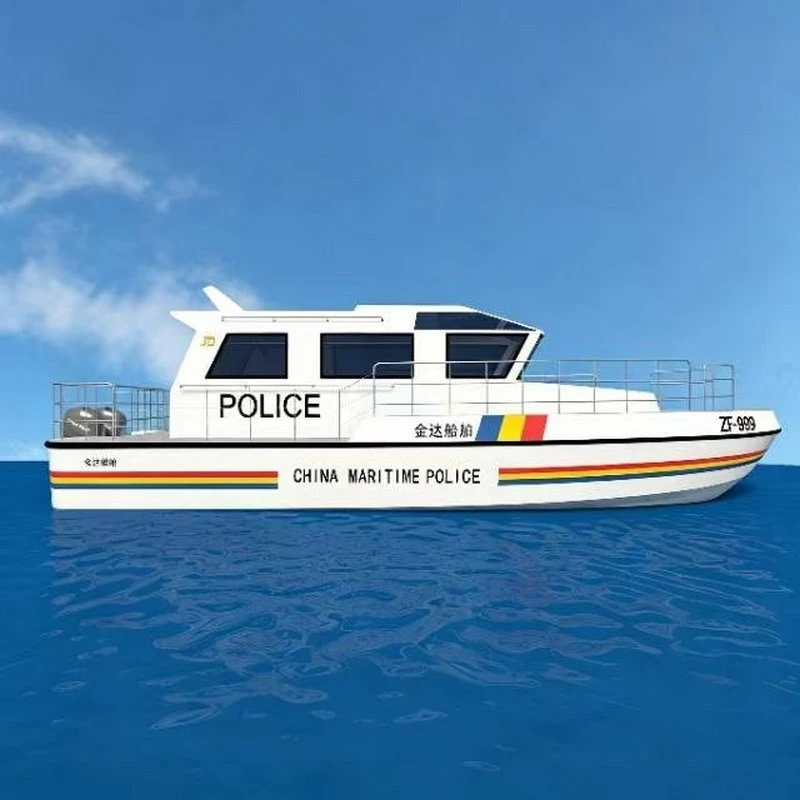
Critical Technical Specifications
A professional technical quotation must evaluate the following interdependent parameters:
|
Specification Parameter |
Engineering Significance |
|
Overall Length (LOA) |
Dictates operational capacity, transport limits, and berthing requirements. |
|
Beam (Width) |
Directly affects initial stability, working deck area, and cabin volume. |
|
Draft |
Determines operational access to shallow rivers, estuaries, or restricted shallows. |
|
Hull Material & Grade |
Influences structural strength, empty weight, corrosion resistance, and lifecycle maintenance. |
|
Hull Configuration |
Shapes hydrodynamic performance, seakeeping, and dynamic stability. |
|
Propulsion Package |
Dictates acceleration, top speed, maneuverability, and servicing requirements. |
|
Fuel Capacity & Range |
Defines operational endurance and safe mission radius. |
|
Payload Capacity |
Must account for total operating weight (crew, fuel, mission systems, and carried gear). |
|
Electrical System |
Powers navigation, communication, thermal imaging, and onboard mission electronics. |
Patrol Boat Procurement FAQ
With abundant experience, we are one of the most professional patrol boats manufacturers and suppliers in China. Please feel free to buy high quality patrol boats made in China here from our factory. We also accept customized orders.
Popular Products