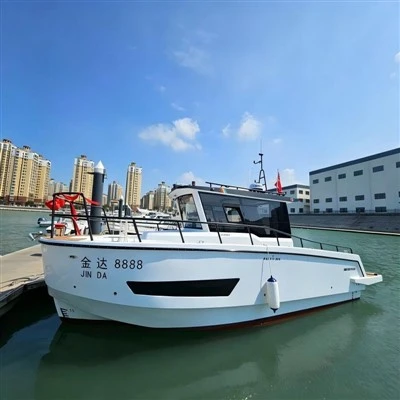

Catamarans: Commercial, Passenger, Workboat and Marine Applications
Catamarans are multihull vessels built around two parallel hulls connected by a central structure and deck. The twin-hull configuration creates a distinct balance of stability, usable deck area, hull loading, and hydrodynamic performance compared with conventional monohull vessels.
For B2B buyers, the right catamaran is determined by its operating profile rather than by vessel size alone. Passenger capacity, payload, operating waters, endurance, propulsion configuration, deck arrangement, hull material, regulatory requirements, and maintenance conditions must be considered together.
We supply catamaran solutions for commercial marine operations, passenger transport, offshore and utility work, patrol applications, fishing, tourism, and other project-specific requirements.
-
![Leisure Passenger Catamarans]() Leisure Passenger CatamaransIdeal for lake cruise operators, coastal tourism companies and scenic area passenger transportation projects, our 26m leisure passenger catamaran adopts a mature twin-hull aluminum alloy...
Leisure Passenger CatamaransIdeal for lake cruise operators, coastal tourism companies and scenic area passenger transportation projects, our 26m leisure passenger catamaran adopts a mature twin-hull aluminum alloy... -
![Sightseeing Catamarans]() Sightseeing CatamaransThis new sightseeing catamaran is a simple, elegant and cost-effective tourist vessel. Designed for commercial operators with no demand for complex and high-cost machinery, this large catamaran...
Sightseeing CatamaransThis new sightseeing catamaran is a simple, elegant and cost-effective tourist vessel. Designed for commercial operators with no demand for complex and high-cost machinery, this large catamaran... -
![Commercial Fishing Catamarans]() Commercial Fishing CatamaransOur commercial fishing catamarans are widely chosen by global fishing enthusiasts for offshore fishing voyages.
Commercial Fishing CatamaransOur commercial fishing catamarans are widely chosen by global fishing enthusiasts for offshore fishing voyages.
This twin-hull vessel is fitted with a large-capacity refrigerator to...


Catamaran Types by Application
The appropriate catamaran configuration depends on what the vessel needs to carry, where it will operate, and how frequently it will be used.
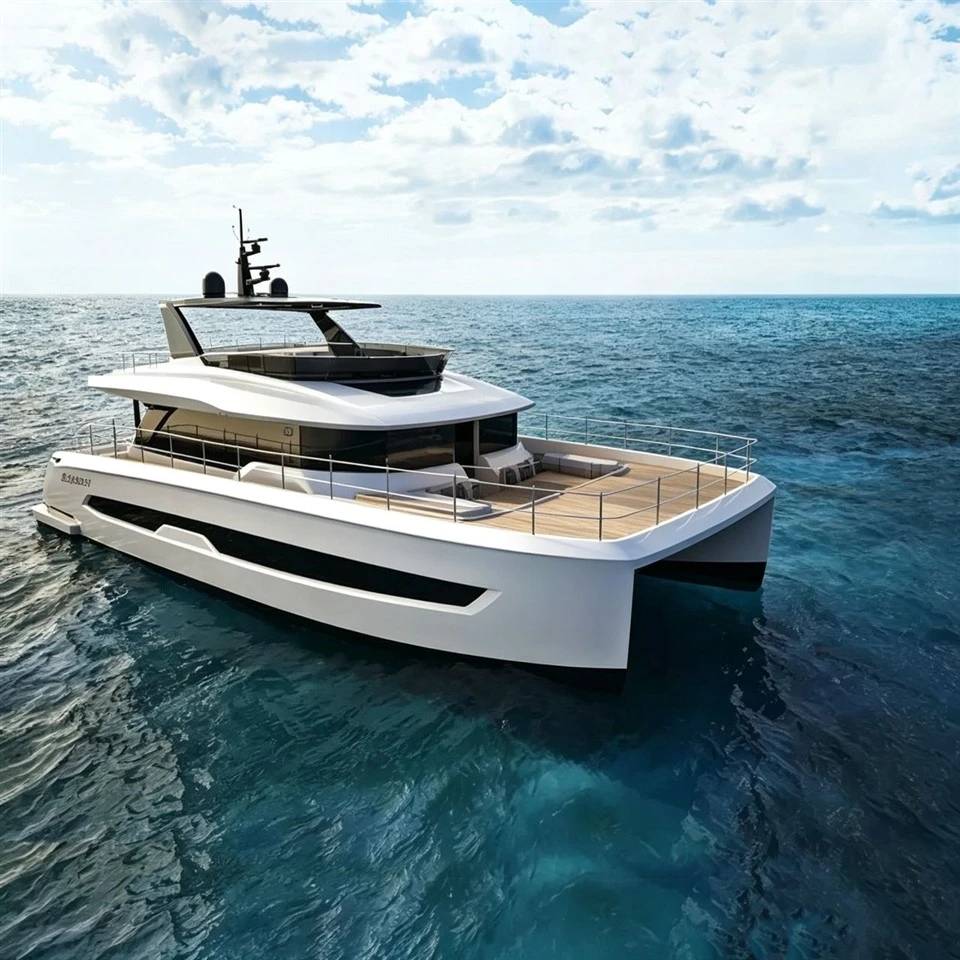


Passenger Catamarans Passenger catamarans are configured around passenger capacity, boarding flow, seating layout, safety equipment, accessibility, and operating range.
Typical applications: Passenger ferry services, island transportation, coastal passenger routes, tourism operations, resort transfers, and harbor transport.
Procurement Tip: Evaluate the vessel under the intended passenger load rather than comparing empty-vessel specifications alone.
Ferry Catamarans Used where scheduled transportation requires predictable loading, passenger movement, and quick turnaround.
Key configuration points: Passenger capacity, boarding and disembarkation arrangement, deck circulation, cargo space, vehicle carrying requirements (where applicable), propulsion configuration, fuel capacity, range, crew facilities, and regulatory compliance.
Work Catamarans Configured for marine service operations where deck space, payload distribution, and working access take priority over passenger accommodation.
Typical applications: Marine maintenance, port operations, utility work, equipment transportation, coastal service, offshore support, and survey/inspection work.
Procurement Tip: Deck loading should be evaluated together with intended equipment, working personnel, and operating conditions.
Patrol and Utility Catamarans Suited for rapid response, crew visibility, equipment installation, and operational endurance.
Dedicated space requirements: Navigation systems, communication systems, observation equipment, personnel accommodation, rescue equipment, specialized storage, and mission payloads.
Fishing Catamarans Designed to provide a broad working platform for heavy fishing equipment, catch handling, crew movement, and onboard storage.
Selection factors: Working deck area, payload capacity, fish storage, equipment arrangement, fuel capacity, crew requirements, and local fishing regulations.
Tourism and Charter Catamarans Requires a balanced focus on passenger capacity, seating comfort, indoor cabins, outdoor deck areas, shade, weather protection, sanitary facilities, and extended cruising range.
Why the Twin-Hull Configuration Matters
A catamaran should not be selected simply because it has two hulls. The true value depends on operational loading conditions:
Stability
The wide separation between the two hulls creates a broad overall beam, providing a stable platform for passenger seating, working decks, and heavy equipment.
Deck Area
The central connection platform offers extensive usable space for passenger seating, cargo handling, and mission-specific equipment.
Load Distribution
Displacement is shared across two hulls rather than concentrated in one, optimizing draft, balance, and center of gravity at full operating load.
Key Catamaran Specifications to Compare
A meaningful supplier comparison should use a consistent technical baseline for every quotation:
Dimensions: Overall Length (LOA), Beam, Draft, Air Draft, Displacement (Lightship and Loaded).
Capacity: Passenger Capacity, Crew Capacity, Maximum Payload, Deck Load Limits.
Capacities & Performance: Fuel Capacity, Fresh-water Capacity, Maximum Speed, Cruising Speed, Operating Range, Endurance.
Engineering: Hull Material, Structural Construction, Engine Configuration & Rating, Drive System, Electrical & Navigation Equipment, Certification Standards.
Hull Material and Construction Approaches
Aluminum Catamarans
Widely used where low structural weight, corrosion management, and efficient fabrication are essential.
Evaluation criteria: Marine-grade aluminum specification, plate and profile thickness, welding process, weld inspection records, structural reinforcement, surface treatments, and isolation of dissimilar materials.
Composite Catamarans
Used where weight control, molded structures, and specialized hull-form requirements are priorities.
Evaluation criteria: Fiber type, resin system, laminate schedule, core material, lamination method, bonding process, and quality inspection records.
Propulsion Configuration
Propulsion should match vessel displacement, required speed, operating range, duty cycle, and regional maintenance conditions.
Common options
Twin-engine systems, outboard propulsion, inboard diesel propulsion, sterndrive systems, and waterjet propulsion.
Procurement Note
Request a complete specification including engine manufacturer/model, rated power, gearbox/drive system, fuel system, cooling system, control architecture, and service access availability.
To ensure accurate evaluation, request comprehensive technical documentation covering:
Vessel Dimensions & Weights: LOA, beam, draft, lightship weight, and deadweight capacity.
Performance Data: Speed curves, fuel consumption at cruising speed, and endurance metrics under defined load.
Structure & Materials
Detailed material certificates, welding/lamination procedures, and corrosion protection systems.
Onboard Systems
Electrical power generation, battery management, navigation, and communication suites.
Regulatory Documentation
Vessel standards, classification society requirements, flag-state compliance, and test commissioning records.
Frequently Asked Questions
With abundant experience, we are one of the most professional catamarans manufacturers and suppliers in China. Please feel free to buy high quality catamarans made in China here from our factory. We also accept customized orders.
Popular Products