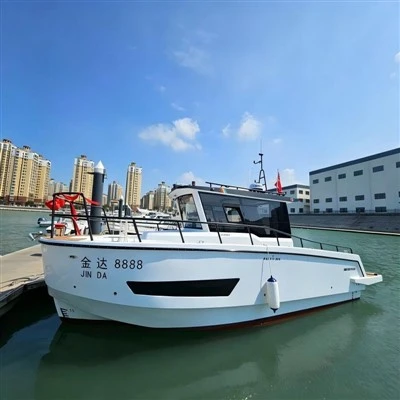

Commercial Fishing Boat Procurement & Configuration Guide
Commercial fishing boats for coastal and offshore fishing operations are configured around vessel size, fishing method, deck layout, storage capacity, propulsion requirements, and operating conditions.
Fishing boat procurement is rarely a simple hull purchase. Buyers need to match the vessel to the target species, fishing gear, operating range, crew size, catch-handling process, and local marine regulations. The right configuration can reduce unnecessary vessel size and equipment while providing the deck space, stability, endurance, and working capacity required for the fishing operation.
-
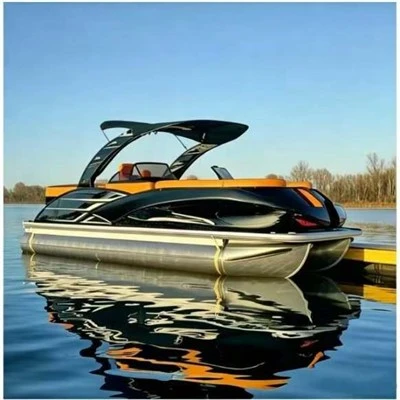
![Aluminum Sport Fishing Boat]() Aluminum Sport Fishing BoatThis yacht is specially designed for offshore sailing experiences. The hull is made of aluminum alloy, with a smooth and neat overall shape. The designed cruising speed can reach 20-30 knots,...
Aluminum Sport Fishing BoatThis yacht is specially designed for offshore sailing experiences. The hull is made of aluminum alloy, with a smooth and neat overall shape. The designed cruising speed can reach 20-30 knots,... -
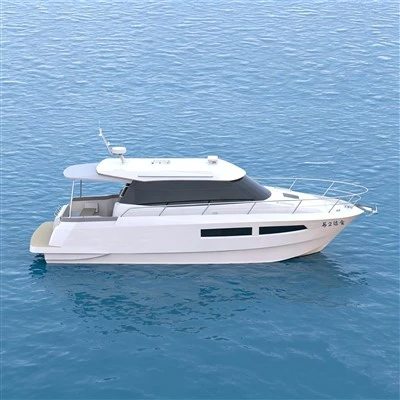
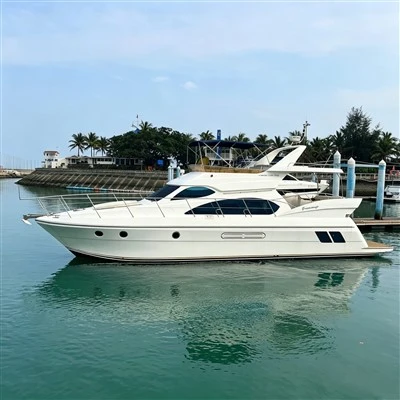
![Aluminum Recreational Fishing Boat]() Aluminum Recreational Fishing BoatThis modernized design luxury fishing yacht is equipped with a sightseeing flybridge. The streamlined white hull is complemented by exquisite window designs, giving it an elegant and imposing...
Aluminum Recreational Fishing BoatThis modernized design luxury fishing yacht is equipped with a sightseeing flybridge. The streamlined white hull is complemented by exquisite window designs, giving it an elegant and imposing... -
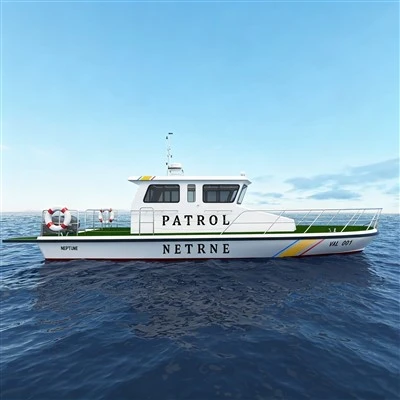
![Large Offshore Fishing Boats]() Large Offshore Fishing BoatsWe have built this 17.68-meter large offshore fishing boat with premium 5083-H116 aluminum-magnesium alloy, engineered for long-distance offshore navigation, commercial fishing operations,...
Large Offshore Fishing BoatsWe have built this 17.68-meter large offshore fishing boat with premium 5083-H116 aluminum-magnesium alloy, engineered for long-distance offshore navigation, commercial fishing operations,... -
![Aluminum Inshore Fishing Boats]() Aluminum Inshore Fishing BoatsWe design and build shallow-draft workboats for coastal operators who need to reach shallow flats, tidal bars and sheltered island waterways that bigger offshore boats cannot. Our aluminum inshore...
Aluminum Inshore Fishing BoatsWe design and build shallow-draft workboats for coastal operators who need to reach shallow flats, tidal bars and sheltered island waterways that bigger offshore boats cannot. Our aluminum inshore... -
![Offshore Sport Fishing Boats]() Offshore Sport Fishing BoatsBuilt for practical nearshore and offshore fishing activities, our 14.8m aluminum sport fishing boat strikes a perfect balance between agile sailing performance, functional fishing layouts and...
Offshore Sport Fishing BoatsBuilt for practical nearshore and offshore fishing activities, our 14.8m aluminum sport fishing boat strikes a perfect balance between agile sailing performance, functional fishing layouts and... -
![Open Deck Fishing Boats]() Open Deck Fishing BoatsOur 7.5m open deck fishing boat is a compact, highly practical aluminum vessel tailored for shallow-water coastal fishing and short-distance maritime activities. Built with premium 5083-H116...
Open Deck Fishing BoatsOur 7.5m open deck fishing boat is a compact, highly practical aluminum vessel tailored for shallow-water coastal fishing and short-distance maritime activities. Built with premium 5083-H116...


Product Overview
A commercial fishing boat is a specialized workboat built for catching, handling, storing, and transporting fish or other marine products. Unlike recreational boats, commercial fishing vessels are specified around the working process rather than passenger comfort alone.
Depending on the operating profile, a fishing boat may be configured with:
The appropriate configuration depends on how and where the vessel will be used. A boat intended for short coastal trips requires a very different layout from an offshore longline or trawling vessel.
Fishing Boat Types
The fishing method is one of the first specifications buyers should establish, as no single configuration suits every fishery.
Coastal Fishing Boats
Coastal fishing boats are intended for relatively short operating ranges and frequent returns to port. They are commonly used for nearshore fisheries, small-scale commercial fishing, shellfish operations, and local seafood supply.
Key Priorities: Practical deck arrangement, easy launching and recovery, fuel efficiency, adequate stability for the intended fishing gear, sufficient fish-storage capacity, simple maintenance, and low operating cost.
Offshore Fishing Boats
Offshore fishing boats operate farther from shore and normally require greater endurance and working capacity.
Procurement Specifications: Increased fuel capacity, larger fish holds, greater freshwater capacity, additional crew accommodation, higher reserve buoyancy, more substantial deck machinery, and hull arrangements suitable for severe sea conditions.
Longline Fishing Boats
Longline vessels are configured around the deployment, retrieval, and handling of longlines carrying numerous hooks.
Design Considerations: Line-handling arrangement, bait preparation and storage, hook and line storage, hauling equipment, working-deck organization, catch handling, crew workflow, and fish preservation capacity.
Trawling Fishing Boats
Trawlers require deck arrangements and machinery capable of handling heavy trawl gear.
Typical Considerations: Trawl winches, net handling equipment, stern or side working arrangement, aft deck working area, catch-handling system, fish hold capacity, and engine power appropriate to vessel displacement.
Net Fishing Boats
Net fishing boats may be configured for gillnetting and other commercial net fisheries.
Deck Requirements: Adequate space for net storage, deployment, retrieval, catch sorting, gear maintenance, and fish handling.
Crab, Lobster & Pot Fishing Boats
Crab, Lobster & Pot Fishing Boats
Pot and trap fisheries place demanding requirements on a vessel because the boat must repeatedly carry, deploy, retrieve, and stack fishing pots.
Useful Specifications: Pot storage capacity, hydraulic pot hauler, reinforced equipment mounting areas, adequate freeboard, and stable working-deck layouts.
How to Select a Fishing Boat
Define the Fishing Method
Identify whether the boat will be used for longlining, trawling, gillnetting, pot or trap fishing, handline fishing, multi-purpose fishing, or shellfish harvesting. This determines the working-deck arrangement and required fishing equipment.
Define the Operating Area
Establish coastal or offshore operation, typical distance from port, expected trip duration, seasonal operating conditions, wave and wind profiles, water depth, and port limitations.
Establish Vessel Size
Evaluate overall length, beam, draft, freeboard, displacement, working-deck area, fish-hold volume, and tank capacities. The correct size balances carrying capacity, operating cost, maneuverability, stability, and port infrastructure.
Select the Propulsion System
Propulsion should match vessel displacement, required cruising speed, fishing speed, operating range, fuel consumption targets, and hull configuration.
Specify Catch Handling
Catch-handling requirements may include fish holds, insulated storage, ice storage, refrigeration, live fish tanks, sorting tables, washing areas, and deck handling equipment.
Review Crew Requirements
Crew numbers affect wheelhouse arrangement, seating, watchkeeping, sleeping berths, galley facilities, sanitary provisions, and freshwater capacity.
Key Fishing Boat Specifications
|
Specification |
Why It Matters |
|
Overall length |
Determines vessel scale, deck space, port compatibility, and regulatory classification |
|
Beam |
Influences stability, working space, and transport requirements |
|
Draft |
Important for shallow-water access and port limitations |
|
Displacement |
Affects propulsion, loading, fuel consumption, and stability |
|
Hull material |
Influences weight, durability, maintenance, and fabrication requirements |
|
Engine power |
Must match vessel displacement and intended operating profile |
|
Fuel / Freshwater capacity |
Determines practical operating endurance and crew support |
|
Fish-hold capacity |
Determines useful catch-storage volume |
|
Deck area |
Critical for fishing gear and catch handling |
|
Electrical system |
Supports navigation, communication, refrigeration, lighting, and deck equipment |
Hull Material and Construction
Aluminum Fishing Boats
Provides a relatively low hull weight and is commonly selected where weight reduction, transportability, or specific performance characteristics are important. Key checks include alloy specification, plate thickness, welding processes, structural reinforcement, and corrosion protection.
Steel Fishing Boats
Often considered for larger or heavier-duty vessels where structural strength, fabrication availability, and repair capability are essential. Key checks include steel grade, plate thickness, structural framing, welding procedures, and coating systems.
FRP / Fiberglass Fishing Boats
Provides natural corrosion resistance and is widely used for small and medium-sized commercial vessels. Key checks include laminate construction, resin systems, reinforcement materials, hull thickness, structural core materials, and bulkhead construction.

Fishing Boat Manufacturing Process
Requirement Definition
The buyer provides the fishing method, operating area, crew size, trip duration, target catch, and equipment requirements.
Preliminary Vessel Design
The supplier develops principal dimensions, hull form, general arrangement, machinery concept, and basic capacity calculations.
Technical Review
The buyer reviews the general arrangement, working deck, fish storage, engine room, and equipment positioning.
Hull Fabrication
Involves cutting, forming, welding, laminating, structural assembly, and bulkhead installation.
Machinery & Equipment Installation
Propulsion, electrical systems, hydraulics, navigation, pumps, tanks, and fishing gear are installed.
Inspection & Testing
Comprehensive checks covering hull integrity, machinery, electrical systems, hydraulics, and sea-trial performance.
Frequently Asked Questions
With abundant experience, we are one of the most professional fishing boats manufacturers and suppliers in China. Please feel free to buy high quality fishing boats made in China here from our factory. We also accept customized orders.
Popular Products