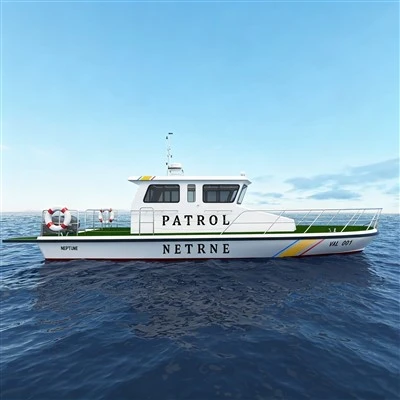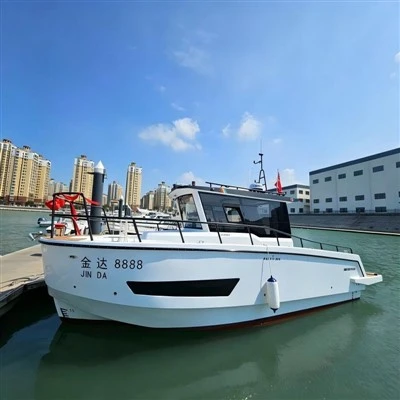
Small boats deployed on ships for various maritime tasks are propelled by oars, sails, or motors. They are primarily used for transportation, landing on beaches, deep-sea exploration, assisting fishing, and cooperating with engineering vessels (such as anchoring, deploying buoys, and laying cables). In addition, government vessels are frequently used for maritime engineering construction (such as material transport during bridge construction), disaster relief and rescue, cargo transport, waterway patrol and inspection, and maintenance of navigation marks, as well as serving as platforms for outboard operations (such as hull maintenance). Their structural form is either open or semi-open with a semi-awning at the bow, often employing a square stern to improve stability and increase deck area.
Modern government vessels are often customized to meet different mission requirements and may be equipped with specialized tools such as cranes, winches, and diving equipment. Their hull structures are relatively robust to support heavier cargo and equipment. Government vessels generally cannot be used as lifeboats; however, small vessels or engineering vessels often have internal buoyancy and certain lifesaving equipment installed on workboats due to difficulties in deploying lifeboats, thus serving as lifeboats. The crew quota for lifesaving operations must fully comply with the requirements of relevant conventions and regulations. In addition to serving as ancillary equipment to ships, government vessels can also be leased to serve specific short-term projects, such as providing support for large-scale water sports events.